
The people who care for your patient can help, with permission
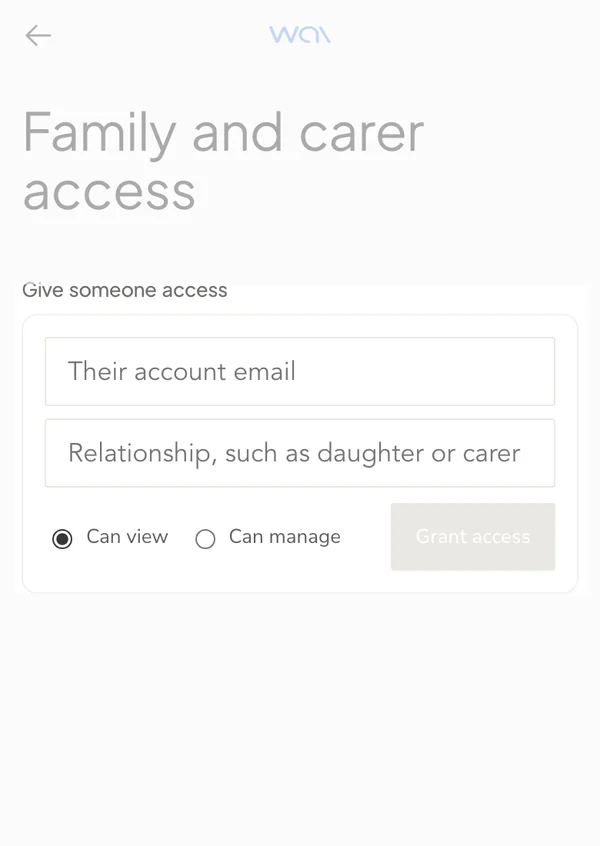
A patient can give a daughter, a husband or a carer access to what they choose, from the plan to the results and appointments, and take it back in a tap. The clinic always knows who is asking.

- Who decides
- The patient
- What they share
- Their choice
- Taken back
- In one tap
- Shared view
- Read only
The problem
The person who organises a patient's care is often not the patient
The family
Your father is seen in London, you live in Dubai, and the only way to know what the doctor said is to ask him.
The front desk
A daughter calls about her mother's results, and you cannot tell what you are allowed to say.
The doctor
The carer gives the medicines, and the plan was explained to someone else.
How it works
Three steps, and your clinic decides each one
The patient invites someone
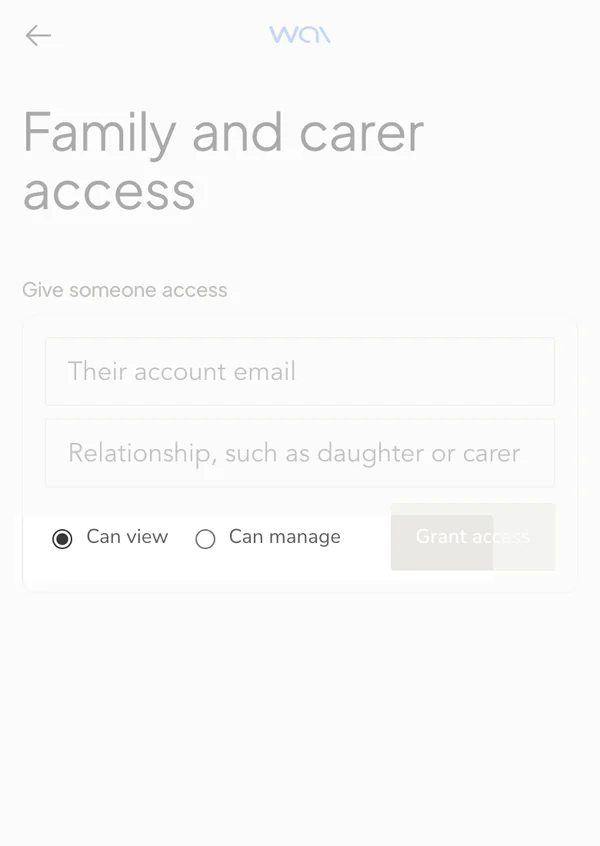
From the app, the patient invites a family member or carer and chooses what they can see. The invitation is personal to them.
They see what they were given
The person invited sees the plan, the results or the appointments they were given, in a view that cannot change the record.
The patient stays in charge
The patient sees who has access and takes it back in a tap. The clinic sees who is asking on whose behalf.
See it on your own patients and your own doctors, in thirty minutes on video.
What changes
Families help with care instead of chasing it
For patients
Support they chose
The people they trust can help, and only with what the patient has shared.
For families
Knowing the plan
No more second-hand accounts of what the doctor said.
For the clinic
Clear permission
The front desk knows exactly who may see what, and the record shows it.
51%
of US caregivers used a care recipient's online record in 2024, up from 24% in 2020.
ASTP Data Brief No. 77, US Department of Health and Human Services, 2025. A published study, not a wai result.
Where it works
The same product in every market, on each market's rules
United Kingdom
Access rests on the patient's consent under UK GDPR. For a patient who lacks capacity, a lasting power of attorney for health decides who acts, and young people's own consent follows Gillick competence.
Part of the clinic's wai plan.
United States
HIPAA personal representative rules and state law on minors' consent decide who may act for a patient.
Part of the clinic's wai plan.
United Arab Emirates
Guardianship and the patient's consent decide access, with the record kept in the country.
Part of the clinic's wai plan.
Elsewhere
Each market's consent and guardianship law decides who may be invited.
Part of the clinic's wai plan.
Records are hosted in each clinic's own country under its rules. Every credential we hold is listed with its status and date on our security page.
Who can give access?
The patient, from their own app. Where someone legally acts for the patient, the clinic records that authority first.
Can the family member change anything?
No. A shared view is read-only, so the record cannot be changed by someone acting for the patient.
Can access be taken back?
Yes, at any time, in one tap. It ends at once.
Does the clinic know who is asking?
Yes. Anyone acting with access is shown as themselves, on behalf of the patient, and the record notes it.
Does it work across countries?
Yes. A daughter in Dubai can see her father's plan in London, and the record stays where the clinic hosts it.
Partner with us
Build it with us, in your clinic
We set each feature up with your doctors, your prices and your rules, and the clinics that partner with us early shape what it becomes.
Or write to team@wellnessa-i.com. We reply within one working day.
